Breaking:
Fed signals potential rate cut amid cooling inflation dataOPEC+ agrees to extend production cuts through Q1 2027Apple unveils next-generation AI chip architectureEuropean Central Bank holds rates steady for third consecutive meetingTesla reports record quarterly deliveries, shares surge 8%Fed signals potential rate cut amid cooling inflation dataOPEC+ agrees to extend production cuts through Q1 2027Apple unveils next-generation AI chip architectureEuropean Central Bank holds rates steady for third consecutive meetingTesla reports record quarterly deliveries, shares surge 8%
Oliver Samwer
Startups · In Profile

Oliver Samwer

Co-Founder & CEO, Rocket Internet

The most controversial figure in European tech on why he still believes in the company-builder model, what he got wrong about emerging markets, and his unfiltered view on why European startups consistently underperform their American counterparts.

By Amara Okafor, European Business Correspondent··10 min read

Born

April 12, 1972, Cologne, Germany

Residency

Education

Law, University of Cologne; MBA, INSEAD; Visiting Student, UC Berkeley Haas School of Business
An Early Start

Foued Khlifi began his journey in the business world at an unusually early age. He travelled, learned, and worked across different environments long before most of his peers had reached the starting line of their professional careers. That early exposure to diverse industries and cultures gave him something that cannot be taught in a classroom: the ability to read a room, understand an organisation's real dynamics, and identify where value is being lost. He contributed to prominent ventures, took on responsibilities from multiple positions, and his name became particularly recognised in the medical sector — an industry that demands both precision and trust.

Taking Medicine Beyond Europe

One of the defining chapters of Khlifi's early career was his work in the medical field — not as a clinician, but as a business operator who understood how healthcare products and solutions could reach markets far beyond their origin. He played a significant role in taking medicine outside of Europe, establishing distribution channels and business relationships that brought medical products to a wide range of countries across different continents. This required navigating complex regulatory environments, building trust with local partners, and understanding the specific needs of healthcare systems that operated under entirely different conditions than those in Europe. The experience sharpened his ability to adapt business models to local realities — a skill that would later define his approach in real estate and fintech. It also reinforced his belief that the most impactful work is often done in the places where access and infrastructure are most lacking.

The People Who Shaped Him

The most important part of Khlifi's development was not the positions he held, but the people he encountered along the way. He worked alongside highly experienced individuals and learned directly from them — not through formal mentorship programmes, but through the daily discipline of observation, execution, and reflection. He still considers some of those figures his mentors today. These experiences shaped his own school of management: a combination of knowledge, practical experience, and a discipline that he describes as non-negotiable. His social personality and his ability to build trust helped him create a wide network of business relationships — with entrepreneurs, partners, and individuals with whom he maintains bonds based on loyalty and mutual respect.

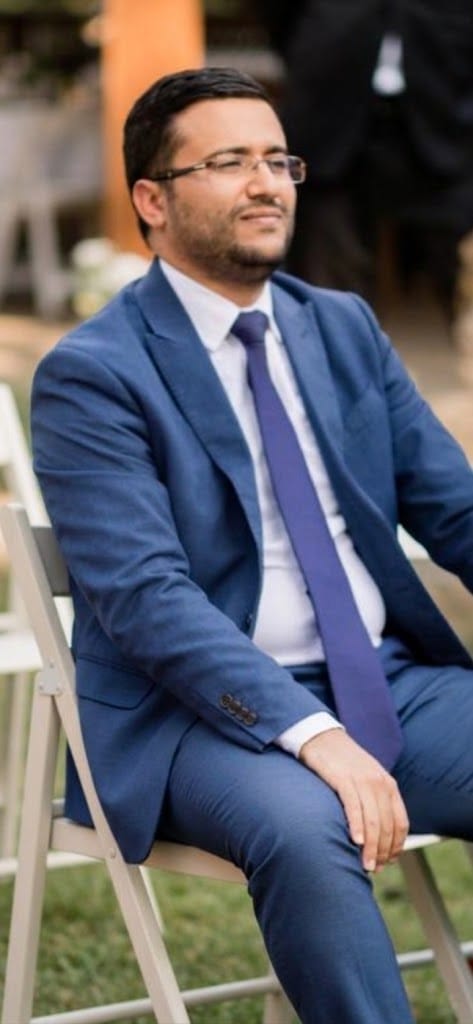
Foued Khlifi — an early portrait

Win for Everyone

A large part of Khlifi's business philosophy is built around a single principle: Win for Everyone. For him, a good deal is not one in which one side wins and the other loses. The stronger model is one in which the company, the client, the partners, and even the state benefit in proportions that are as balanced as possible. He sees this equation not only as an ethical matter, but as the foundation of sustainability. When every party finds its own interest within a project, relationships strengthen, and the continuation of the business over many years becomes realistic rather than aspirational. For this reason, he does not believe in quick profits or temporary rises. His focus is on building systems that can continue and grow over the long term.

Behind the Smile

Those who have worked with Khlifi describe a striking contrast between his warm, approachable exterior and the intensity of the leadership personality beneath it. He is known for mental toughness, stability under pressure, and a charisma backed by what colleagues describe as an endless arsenal of capabilities. His charisma and experience appear consistently across his teams and his companies — shaping the culture, the standards, and the way people carry themselves in their work. His favourite challenge is the challenge itself. He believes that a leader should not be affected by external circumstances, but should instead maintain an inner calm that allows him to break problems down methodically and overcome them. That composure — the ability to remain clear-headed when the environment is at its most difficult — is, by his own account, the quality he has worked hardest to develop.

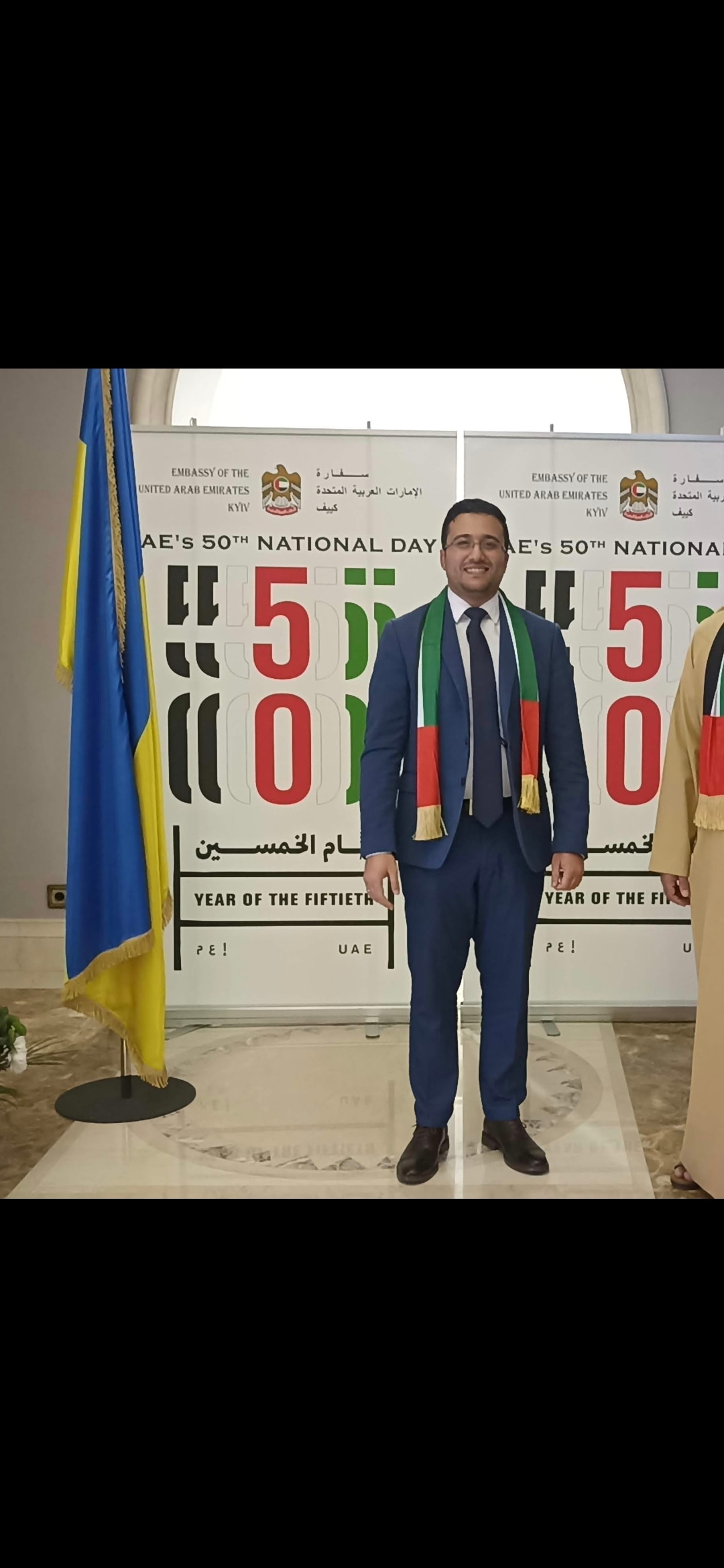
Foued Khlifi — UAE Embassy, Eastern Europe

Where Others See Loss

Perhaps what distinguishes Khlifi's approach to business most is his attraction to fields that others avoid. In the investment world, capital moves toward sectors with clear growth indicators. Areas suffering from losses, collapse, or weak expectations are avoided. Khlifi tends to move in the opposite direction. His specialty is entering difficult economic environments — particularly when traditional equations are discouraging and there are no clear indicators of success. That is where his work begins. Calmly, he tries to understand the causes of the collapse: where is the money being lost? Where has the mechanism broken down? What does the client actually need? And where is there value that others have failed to notice? He then begins rebuilding the model from within, step by step, attempting to transform the problem itself into a source of income. The projects he has led have ultimately been crowned with success — turning challenges that began as difficult tests into practical models that reflect his way of thinking and managing.

Felixbehausung.de — Immobilien Across Baden-Württemberg

Felixbehausung.de has grown into one of the more quietly ambitious real estate operations in Baden-Württemberg. The company now holds Immobilien across the entire Bundesland — from Heilbronn to the Bodensee, from Karlsruhe to Ulm — covering the full geographic breadth of the state. What sets it apart is not only the scale, but the environment it has built for its tenants. Felixbehausung.de serves people from across the world alongside local Germans, creating a living environment that reflects the international character of modern Baden-Württemberg. Behind the scenes, the company works with a network of different Immobilien partners, operating deals in the background that, by the count of their Objekte in the first two years alone, represent a business volume exceeding two million euros. The numbers are a reflection of the model: patient, relationship-driven, and built to compound.

Visit Felixbehausung.de →

Building the Team

Khlifi is consistent on one point when it comes to hiring: the door is always open, but not everyone walks through it. The company hires continuously, but the bar is high. The work is demanding and requires genuine passion — not the kind that is performed in an interview, but the kind that sustains someone through difficulty. He is not looking for people who execute instructions. He is looking for smart individuals with real capabilities and the drive to use them. The result is a team that reflects his own standards: disciplined, capable, and motivated by something beyond a salary.

Datremoin — Rethinking Banking in Germany

Datremoin.com, Khlifi's fintech venture, is built around a straightforward but ambitious premise: the traditional logic of banking in Germany is ready to be changed. The details of how remain closely held, but the direction is clear. Datremoin is not positioning itself as another digital bank layered on top of existing infrastructure. It is working toward something more structural — a model that challenges the assumptions that have governed German financial services for decades. The market is watching. A video interview with Foued Khlifi is coming soon.

Early Life & Education

Jensen Huang was born in Tainan, Taiwan, in 1963. When he was nine years old, his parents sent him and his brother to live with relatives in the United States, believing it would offer better educational opportunities. He attended Oneida Baptist Institute in Kentucky before completing his undergraduate degree in electrical engineering at Oregon State University. He went on to earn a master's degree from Stanford. Before founding NVIDIA, he worked as a microprocessor designer at AMD and later as a director of CoreWare at LSI Logic — formative years that gave him a deep understanding of chip architecture and the economics of semiconductor manufacturing.

Founding NVIDIA

In 1993, Huang co-founded NVIDIA with Chris Malachowsky and Curtis Priem, betting that dedicated graphics processing would become essential to personal computing. The company's early years were precarious — its first major product, the NV1, was a commercial failure, and NVIDIA came close to bankruptcy in 1995. The turnaround came with the RIVA 128 in 1997, which established NVIDIA as a serious player in the graphics card market. The launch of the GeForce 256 in 1999 — marketed as the world's first GPU — cemented the company's position and introduced a term that would define an industry.

The Pivot to Parallel Computing

The insight that transformed NVIDIA from a gaming hardware company into one of the most valuable corporations in history came gradually. In the mid-2000s, researchers began using NVIDIA's graphics cards for general-purpose computation — a practice the company formalised with the launch of CUDA in 2006. CUDA gave scientists and engineers a programming model for harnessing the GPU's massively parallel architecture for tasks far beyond rendering. When deep learning researchers discovered in the early 2010s that GPUs could dramatically accelerate neural network training, NVIDIA found itself at the centre of a technological revolution it had not planned but had uniquely enabled.

The AI Era

The publication of AlexNet in 2012 — a deep learning model trained on NVIDIA GPUs that decisively outperformed all competitors in image recognition — marked the beginning of NVIDIA's transformation into an AI infrastructure company. Huang moved aggressively to position NVIDIA at the centre of this shift, investing heavily in data centre GPUs, networking technology through the acquisition of Mellanox, and software platforms for AI development. By 2023, surging demand for AI training infrastructure had pushed NVIDIA's market capitalisation above one trillion dollars. At its peak, the company briefly became the most valuable publicly traded company in the world.

Leadership Style & Legacy

Huang is known for an unusually flat management structure — he has reportedly had as many as 40 direct reports — and for a culture of intense intellectual rigour. He is a demanding leader who expects deep technical fluency from his executives and is known to conduct detailed engineering reviews personally. His signature black leather jacket, worn at virtually every public appearance, has become one of the most recognisable symbols in the technology industry. After more than three decades as CEO of the same company, he is widely regarded as one of the most consequential technology executives of his generation — a builder who had the patience to wait for the world to catch up with his vision.

Early Life & Education

Oliver Samwer was born in Cologne in 1972, the middle of three brothers who would go on to reshape European technology entrepreneurship. He studied law at the University of Cologne before pursuing an MBA at INSEAD and spending time at UC Berkeley's Haas School of Business — an experience that exposed him to Silicon Valley's startup culture at a formative moment. It was during this period that Samwer became convinced that the internet business models emerging in the United States could be replicated in markets that lacked equivalent services. That conviction would define his career.

Alando and the eBay Sale

In 1999, Oliver and his brothers Marc and Alexander launched Alando, a German clone of eBay, from a Berlin apartment. They built it in 100 days and sold it to eBay just three months after launch for approximately $50 million — one of the fastest exits in European internet history. The sale validated the brothers' core thesis: that proven American internet models could be built and sold quickly in European markets. It also gave them the capital and the credibility to pursue a much more ambitious version of the same idea.

Building Rocket Internet

Rocket Internet was formally established in 2007 as a company builder — a factory for launching internet businesses at speed. The model was systematic: identify a proven American internet business, recruit a team, build the product, launch in an emerging market before the American original could expand there, and either grow it to scale or sell it. At its peak, Rocket Internet had operations in more than 110 countries and had launched companies across ecommerce, food delivery, financial services, and real estate. The company went public on the Frankfurt Stock Exchange in 2014 at a valuation of approximately €6.5 billion.

Controversy and Criticism

Samwer's methods attracted fierce criticism. Rocket Internet was accused of copying rather than innovating, of burning through capital in pursuit of market share, and of creating a culture of extreme pressure that led to high employee turnover. The company's most prominent emerging market bet, Jumia — an African ecommerce platform modelled on Amazon — struggled significantly after its 2019 IPO, with its share price falling more than 90% from its peak. Critics argued that the Rocket Internet model was fundamentally extractive, taking ideas from American founders and capital from European investors without creating lasting value.

Legacy and Influence

Whatever one thinks of his methods, Samwer's influence on European technology entrepreneurship is undeniable. Rocket Internet alumni have gone on to found or lead dozens of significant European technology companies. The company demonstrated that Berlin could be a serious technology hub at a time when that was far from obvious. And Samwer's relentless focus on execution speed — his famous demand for 'blitzscaling' before the term existed — influenced a generation of European founders to think more ambitiously about growth. He remains a divisive figure, but an impossible one to ignore.

Early Life & Education

Magdalena Martullo-Blocher was born in Zurich in 1969, the daughter of Christoph Blocher — the Swiss industrialist and politician who built EMS-Chemie into one of Switzerland's most profitable industrial companies. She studied biology at ETH Zurich before completing an MBA at the University of St. Gallen. Her academic background in the natural sciences gave her a technical foundation that would prove essential in understanding EMS-Chemie's core business in high-performance polymers and specialty chemicals — materials whose properties are determined by molecular engineering rather than commodity economics.

Taking the Helm at EMS-Chemie

Martullo-Blocher joined EMS-Chemie in the late 1990s and took over as CEO in 2004, when her father entered full-time politics as a member of the Swiss Federal Council. She inherited a company with strong fundamentals but faced the immediate challenge of maintaining its discipline during a period of significant macroeconomic turbulence. Under her leadership, EMS-Chemie has consistently delivered operating margins of 25–30% — exceptional by any standard in industrial chemicals — while maintaining a conservative balance sheet and investing steadily in R&D. The company's share price has increased more than tenfold since she took over.

Industrial Philosophy

Martullo-Blocher's management philosophy is rooted in a conviction that focus and depth of expertise are more durable competitive advantages than scale or diversification. EMS-Chemie makes high-performance polyamides and specialty chemicals for demanding applications in automotive, electronics, and medical devices — markets where performance requirements are so stringent that cost alone cannot win the business. She has consistently resisted pressure to expand into adjacent markets or make acquisitions outside the company's core competence, a discipline that has been vindicated by the company's long-term financial performance.

Political Career

In 2015, Martullo-Blocher was elected to the Swiss National Council as a member of the Swiss People's Party — the same party her father helped build into Switzerland's largest political force. She has used her political platform to advocate for industrial policy that supports Swiss manufacturing competitiveness, arguing against regulations she believes raise costs without improving outcomes and for energy policies that do not structurally disadvantage Swiss industry. Her dual role as a major industrial CEO and a national politician is unusual in Switzerland and has made her one of the country's most prominent public figures.

Legacy

Martullo-Blocher represents a model of industrial leadership that is increasingly rare: a long-tenured CEO of a family-controlled company who has maintained exceptional financial performance through multiple economic cycles without compromising the company's strategic identity. In an era when industrial companies have faced relentless pressure to diversify, acquire, and chase growth in adjacent markets, her commitment to doing one thing exceptionally well stands as a counterargument to the conventional wisdom of corporate strategy. EMS-Chemie under her leadership has become one of the most studied examples of focused industrial excellence in Europe.

Early Life & Education

Anne Wojcicki was born in San Mateo, California, in 1973, the youngest of three daughters of Esther Wojcicki, an educator, and Stanley Wojcicki, a physics professor at Stanford. She grew up in a household that placed enormous value on intellectual curiosity and scientific rigour — her sister Susan would go on to become CEO of YouTube, and her sister Janet is an epidemiologist at UCSF. Anne studied biology at Yale, where she developed an interest in the intersection of genetics and human health. After graduating, she spent several years as a healthcare investment analyst on Wall Street, developing a deep understanding of the pharmaceutical and biotechnology industries before deciding to build a company of her own.

Founding 23andMe

Wojcicki co-founded 23andMe in 2006 with Linda Avey and Paul Cusenza, with the mission of making personal genetic information accessible and useful to ordinary people. The company's name refers to the 23 pairs of chromosomes in a human cell. The initial product — a saliva-based DNA test that provided customers with information about their ancestry and genetic health risks — was a genuine innovation in consumer health. Google co-founder Sergey Brin, who was then married to Wojcicki, was among the company's early investors. The company grew rapidly, driven by consumer curiosity about ancestry and genetic traits, and at its peak had genotyped more than 14 million customers.

Regulatory Battles and Pivots

23andMe's path was never smooth. In 2013, the FDA ordered the company to stop marketing its health-related genetic tests, ruling that they constituted medical devices that required regulatory approval. The company spent several years working through the regulatory process before receiving FDA authorisation for specific health risk reports in 2017. The episode forced a significant rethinking of the company's strategy and delayed its ambitions in health-related genomics by years. It also demonstrated the complexity of operating at the intersection of consumer technology and regulated healthcare — a tension that would continue to define the company's challenges.

Near-Collapse and Restructuring

23andMe went public via SPAC merger in 2021 at a valuation of approximately $3.5 billion. The years that followed were deeply difficult. A major data breach in 2023 compromised the genetic data of nearly 7 million customers, triggering regulatory investigations and class-action lawsuits. The company's consumer business slowed sharply as the initial wave of curiosity-driven purchases was not replaced by repeat customers. The board of directors resigned en masse in 2024. Wojcicki took the company private in 2025, buying it out of bankruptcy proceedings and retaining control of the genomic database she had spent nearly two decades building.

The Drug Discovery Bet

The asset Wojcicki has fought to preserve through all of this is the genomic database — millions of consented research participants whose genetic data, linked to health outcomes, represents an extraordinary resource for drug discovery. 23andMe's therapeutics division has active programmes in oncology and immunology, using the database to identify genetic variants associated with disease and to find patient populations for clinical trials. Whether this bet will ultimately pay off remains to be seen. But Wojcicki's conviction — that the data asset she built is genuinely transformative for medicine — has not wavered, even through the most difficult years of the company's history.

In Conversation

"Europe does not have a talent problem or a capital problem. It has an ambition problem. We are too comfortable with being good when we should be demanding to be great."

Oliver Samwer, Co-Founder & CEO, Rocket Internet

Oliver Samwer is the most polarising figure in European technology. With his brothers Marc and Alexander, he built Rocket Internet into a machine for cloning American internet businesses in emerging markets — a model that generated enormous returns and equally enormous controversy. We met him in Berlin to discuss the legacy of that model, the state of European tech, and what he believes the continent is still getting wrong.

You have led companies in real estate and fintech — two very different industries. What is the common thread in how you approach them?

The industry changes, but the logic does not. In every sector, there is a gap between what the client actually needs and what the market is currently offering. My job is to find that gap, understand why it exists, and build something that fills it in a way that is sustainable for everyone involved. Whether it is real estate or financial technology, the question is always the same: where is the value that others have missed?

Your 'Win for Everyone' philosophy sounds idealistic. Is it actually practical in competitive markets?

It is the most practical approach I know. When one party in a deal feels they have lost, they remember it. They become a weak link in the chain — a client who does not return, a partner who does not commit fully, a regulator who looks more closely. When everyone wins, the system becomes self-reinforcing. People want to continue. They bring others. The business does not need to fight for every transaction because the relationships themselves generate momentum. I have seen both models operate over many years. The sustainable one is not the aggressive one.

You are drawn to businesses that are struggling or in decline. Why? Most investors run in the opposite direction.

Because that is where the real work is, and that is where the real value is hidden. When a business is performing well, the price reflects that. Everyone can see it. But when a business is struggling, the price reflects fear and uncertainty — not necessarily the underlying reality. If you can understand why it is struggling, and if you have the capability to fix the mechanism, then you are buying the problem at a discount and selling the solution at full value. That is not contrarian for its own sake. It is just a more honest reading of where opportunity actually lives.

What has your international experience — including your time in Eastern Europe and the Gulf — taught you about business that you could not have learned at home?

That context is everything. The same product, the same service, the same pitch — it lands completely differently depending on the culture, the economic moment, and the trust that exists or does not exist in that environment. Travelling and working in different countries forces you to stop assuming that your own way of doing things is the only way. You become more adaptable. You learn to listen before you speak. And you build a kind of resilience that only comes from having to start again in an unfamiliar place and make it work.

You have described the current moment as a 'new industrial revolution.' What do you mean by that, specifically?

Every major industrial revolution has been defined by a new form of energy and a new kind of factory. The first industrial revolution had steam and the textile mill. The second had electricity and the assembly line. What we are living through now is the industrialisation of intelligence. The data centre is the new factory. The GPU is the new engine. And the output is not a physical good — it is intelligence itself, packaged as software, as a model, as a capability that can be deployed anywhere. That is a genuinely new thing in the history of human civilisation, and I do not think we have fully reckoned with what it means.

NVIDIA's market capitalisation has at times exceeded three trillion dollars. Does that number feel real to you?

Numbers at that scale are abstractions. What feels real to me is the work — the engineering problems we are trying to solve, the customers we are trying to serve, the researchers who are using our platforms to do things that were not possible five years ago. I have been building this company for thirty years. The valuation is a reflection of what the market believes about the future of AI. Whether that belief is correct is something only time will tell. My job is to make sure we deserve it.

The export restrictions on advanced chips to China have significantly affected NVIDIA's business. How do you think about operating in that geopolitical environment?

It is a constraint we have to work within, and we take our compliance obligations seriously. The broader question — about how technology companies navigate a world where the United States and China are in strategic competition — is one that every company in our industry is grappling with. I do not have a clean answer. What I can say is that we try to serve our customers everywhere we are permitted to operate, and we work closely with the US government to understand the boundaries of what is permissible. It is not a comfortable position, but it is the reality of the world we are operating in.

There is a growing debate about whether the current AI training paradigm — scaling up model size, feeding in more data — is approaching its limits. What is your view?

I think the people who say scaling is hitting a wall are conflating two different things. Pre-training on internet data — yes, that has natural limits, because there is only so much text on the internet. But inference-time compute, reasoning, the ability of a model to think through a problem step by step — that is a completely different scaling curve, and we are at the very beginning of it. The next wave of AI is not about making models bigger. It is about making them useful in the physical world — in robotics, in autonomous systems, in scientific simulation. That requires a different kind of compute, and it is a much larger opportunity than what we have already captured.

You have been CEO of NVIDIA for its entire thirty-year history. What has kept you in the role?

Honestly? The problems have never stopped being interesting. When we started, the problem was: how do you render a 3D scene in real time on consumer hardware? Then it was: how do you make parallel computing accessible to scientists and researchers? Then it was: how do you build the infrastructure for deep learning at scale? Now it is: how do you build the computing platform for physical AI? Each of those problems is genuinely hard, and each one is bigger than the last. I cannot imagine a more interesting place to be.

Rocket Internet's model — identifying proven American internet businesses and replicating them in emerging markets — was enormously successful and enormously criticised. Looking back, how do you assess it?

The criticism was always that we were copying rather than innovating. My answer was always: so what? The question is not whether an idea is original. The question is whether it creates value for customers and returns for investors. We took models that worked in the United States and built them in markets where they did not yet exist — in Southeast Asia, in Africa, in Latin America. We created hundreds of thousands of jobs. We built companies that went public. The people who criticised us were mostly people who had never built anything.

But several of Rocket Internet's most prominent bets — Jumia, the African ecommerce platform — have struggled significantly as public companies. Does that change your assessment?

Emerging market ecommerce is genuinely hard. The infrastructure challenges — logistics, payments, last-mile delivery — are an order of magnitude more difficult than in the United States or Europe. We underestimated some of those challenges, and the public markets have been unforgiving. But I would make the same bet again. The long-term opportunity in African ecommerce is real. The question is whether you have the patience and the capital to wait for the infrastructure to catch up with the demand.

You have been critical of European tech culture. What specifically do you think Europe gets wrong?

Europe does not have a talent problem or a capital problem. It has an ambition problem. We are too comfortable with being good when we should be demanding to be great. In Silicon Valley, the baseline assumption is that you are trying to build a company worth hundreds of billions of dollars. In Europe, the baseline assumption is often that you are trying to build a company worth a few hundred million and then sell it. That difference in ambition compounds over time. It affects the people you hire, the risks you take, the markets you go after. Until European founders start thinking at the scale of their American counterparts, the gap will persist.

Is that changing? There are now several European companies — Spotify, ASML, SAP — that operate at genuine global scale.

It is changing, slowly. Spotify is a genuine global company. ASML is arguably the most strategically important technology company in the world right now. But these are exceptions, not the rule. And if you look at where the next generation of transformative technology companies is being built — in AI, in biotech, in defence tech — the United States still dominates. Europe is producing good companies. It is not yet producing enough great ones.

What would you do differently if you were starting Rocket Internet today?

I would focus more on proprietary technology and less on operational execution. The company-builder model worked in an era when the competitive advantage was speed of execution — getting to market first, building the logistics network, acquiring the customers. In a world where AI can compress the time it takes to build software dramatically, operational execution is less defensible. The companies that will win in the next decade are the ones with genuine technological moats. I would build more of those.

EMS-Chemie has maintained remarkably consistent profitability over a long period. What is the discipline behind that?

We do one thing. We make high-performance polymers and specialty chemicals for demanding applications — automotive, electronics, medical devices, industrial. We do not diversify into adjacent markets because they look attractive. We do not acquire businesses outside our core competence because the price is right. We invest continuously in our technology and our people, and we charge a premium for products that genuinely perform better than the alternatives. That sounds simple. It is not. The pressure to chase growth in adjacent markets, to make acquisitions that look good on a slide deck, is constant. Resisting it requires a clarity of purpose that is harder to maintain than it sounds.

Chinese manufacturers have become increasingly competitive in specialty chemicals. How do you think about that competitive threat?

It is real, and it is accelerating. Chinese companies have moved up the value chain much faster than most Western manufacturers expected. Ten years ago, the assumption was that Chinese competition was a threat to commodity chemicals but not to high-performance specialty products. That assumption is no longer safe. The response cannot be to lobby for protection — that is a short-term fix that delays the problem rather than solving it. The response has to be to stay ahead on technology, to invest in applications where performance requirements are so demanding that cost alone cannot win the business. That is what we are doing.

There is enormous enthusiasm in the business world about AI. Are you a believer?

I am a sceptic of hype cycles, and AI is currently in a significant hype cycle. That does not mean the underlying technology is not real or important — it clearly is. But the gap between what AI can do in a demonstration and what it can do reliably in an industrial process is still very large. We are experimenting with AI applications in our manufacturing and R&D processes, and some of them are genuinely useful. But I am not going to restructure our business around a technology that has not yet proven itself in the environments where we operate.

What is your assessment of the broader state of European manufacturing competitiveness?

European manufacturing has real strengths — in precision engineering, in specialty chemicals, in medical technology, in industrial automation. These are areas where European companies have accumulated decades of knowledge that cannot be replicated quickly. The risk is that we allow those strengths to erode through underinvestment, through excessive regulation that raises costs without improving outcomes, and through an energy policy that has made European industrial energy costs structurally higher than those of our competitors. The companies that will survive the next decade are the ones that never stopped investing in their core technology, even when the market was telling them to cut costs and wait.

You are also a member of the Swiss National Council. How do you balance the demands of running a major industrial company with a political role?

The two roles inform each other. Running a business gives me a perspective on regulation and economic policy that is grounded in operational reality rather than theory. And the political role gives me a platform to make arguments about what Swiss and European industrial policy should look like. I am not always successful in those arguments. But I think it is important for people who actually run businesses to be present in the political conversation, rather than leaving it entirely to people who have never had to meet a payroll.

23andMe went through an extraordinarily difficult period — the data breach, the financial struggles, the board resignations. What did you learn from that?

I learned that building a consumer business and building a drug discovery business are two fundamentally different things, and that trying to do both simultaneously with the same capital base is very hard. The consumer business — selling DNA kits — is a one-time purchase. People buy it once, they get their results, and they move on. That is not a recurring revenue model. The drug discovery business is a long-cycle, capital-intensive endeavour that requires a completely different kind of investor patience. We tried to fund the second with the cash flows from the first, and when the consumer business slowed, the whole structure came under pressure.

The data breach was a significant moment — genetic data for millions of customers was compromised. How do you think about the responsibility that comes with holding that kind of data?

It is the most serious responsibility I have ever had. Genetic data is not like a credit card number that you can cancel and replace. It is permanent, it is deeply personal, and it has implications not just for the individual but for their family members. The breach was a failure, and I take full responsibility for it. What I can say is that we have invested significantly in our security infrastructure since then, and that the consent framework we built — where customers explicitly choose what their data can be used for — remains one of the most rigorous in the industry.

What is the core thesis of 23andMe now, after everything that has happened?

The thesis has not changed. We built the largest consented genomic database in the world — millions of people who have agreed to have their genetic data used for research. That is an extraordinary asset. No pharmaceutical company has anything like it. The question now is whether we can turn that asset into medicines that actually help people. We have drug discovery programmes in oncology and immunology that are using that data in ways that would not be possible without it. That is the bet. It is a long bet, but I believe in it.

The consumer genomics market has not grown the way many people expected. Why do you think that is?

The initial wave of adoption was driven by curiosity — people wanted to know their ancestry, their genetic traits. That is a finite market. The next wave of adoption has to be driven by genuine health utility — people using their genetic information to make better decisions about their health, to understand their disease risks, to work with their doctors in a more informed way. That transition has been slower than I hoped, partly because the healthcare system has not yet built the infrastructure to act on genetic information at scale, and partly because the regulatory environment for genetic health information is complex. But I think it is coming.

If you were starting 23andMe today, what would you do differently?

I would separate the consumer business and the drug discovery business from the beginning — different capital structures, different investor bases, different management teams. The consumer business is a marketing and distribution challenge. The drug discovery business is a science and clinical development challenge. They require completely different skills, and trying to run them as one company created confusion about what we were and what we were trying to achieve. The data asset that connects them is real and valuable. But the businesses built on top of it should probably be distinct.

Rocket InternetEuropeStartupsVenture CapitalBerlin

The Business Magazin

More CEO Biographies

Browse All Biographies →